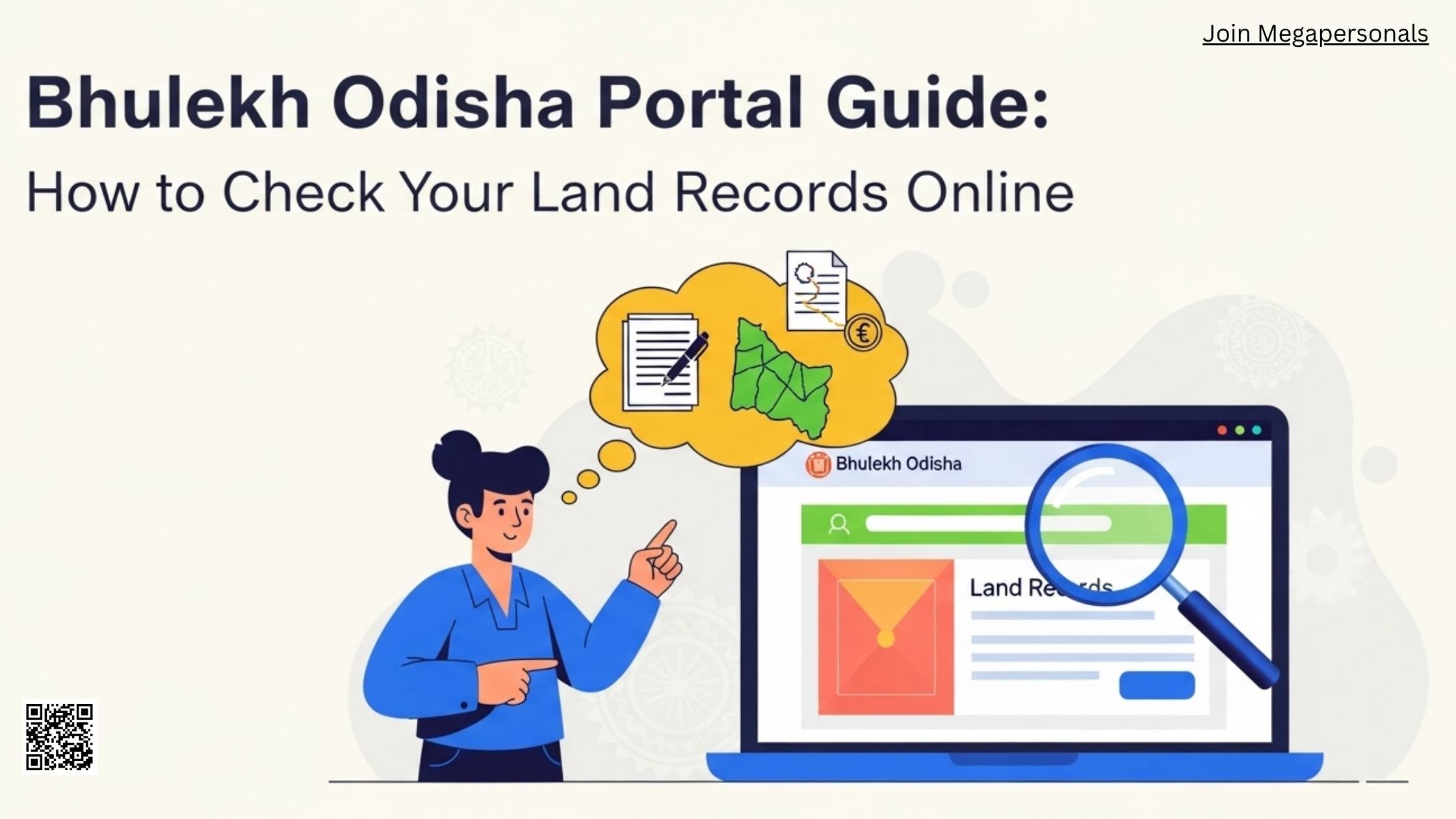
If you live in Odisha, you already know how stressful it feels to run from office to office just to confirm simple land details. Kabhi kabhi ek choti si information ke liye poora din nikal jata hai. That’s exactly why the online land record system was introduced — so people like us can check important ownership details, plot numbers, and map views from anywhere without standing in long queues.
This guide walks you through the portal in a clear, practical, and conversational way. I’ll explain what it is, how it works, real examples, common issues people face, and everything an everyday landowner or buyer needs to understand. Whether you’re exploring property documents for the first time or cross-checking records for a purchase, this detailed explanation will help you feel confident and informed.
What the Portal Actually Does
The state created an online platform where anyone can view land information registered under Revenue and Disaster Management. If you’ve ever searched for plot details, tenant information, or want to see your RoR (Record of Rights) online, this is the system used by citizens across districts. Instead of relying only on physical copies, the online system displays updated land records in digital form.
You can view three major data types here:
- RoR view
- Khatiyan information
- Bhu Naksha map layers
These sections help individuals confirm ownership, check tenancy status, and verify mutation updates.
Why People Use the Portal Today
Many Odia families depend on agriculture or inherited land, and physical papers are easy to misplace. Sometimes old records fade, get damaged, ya kabhi naam update hi nahi hota. This online system helps fill those gaps. People check records online for different practical reasons:
- To confirm their land belongs to them
- To compare documents before buying land
- To check mutation status before registration
- To verify boundary details with the digital map
- To cross-check plot numbers during disputes
- To collect basic ownership details for bank loans
These aren’t academic uses. These are real scenarios people face every day, and the online portal makes these tasks faster.
How the System Stores Information
The digital records come from the Revenue Inspector Circle and Tahasil office database. Each district has its own updated entries. For example, if someone from Ganjam district wants to check a small plot near Hinjilicut, the record stored in that district server will appear instantly once they select the right Tahasil.
The platform has three major identifiers:
- District
- Tahasil
- Village
Once these are selected, the system pulls specific data like Khata number and plot number. Everything is connected through internal records maintained at the circle level.
Step by Step How You Check Land Records
Now let’s move into the main practical walkthrough. If you have ever wondered how to view ownership details, here is a clear and easy explanation.
Selecting Your District
The first step is choosing the correct district from the dropdown list. Suppose you belong to Balasore. Once you select it, the next dropdown adjusts automatically to show only Balasore’s Tahasil list. This prevents confusion from selecting the wrong combination.
Choosing the Right Tahasil
The Tahasil selection is the most crucial step. Even a small mistake here brings completely different results. Let’s say your ancestral land is in Bahanaga Tahasil. Selecting a neighbouring one like Baliapal will not show your data. People often confuse these names, especially in regions where boundaries feel close.
Selecting Village
After choosing Tahasil, the village list appears. Many villages have similar names. For example, “Nuagaon” appears in multiple districts. This is where people make mistakes, so always confirm you’re selecting the village under the correct Tahasil.
Choosing the Type of Record
You get options like:
- Khatiyan
- Plot
- Tenant
If you only know the owner name, choose “Tenant.” If you know the plot number, select “Plot.” If your family uses the Khata number frequently, select “Khatiyan.”
Viewing the RoR
Once selected, the Record of Rights appears. This record contains:
- Current owner name
- Father or husband name
- Land type
- Kissam (classification)
- Plot number
- Area
- Tenancy type
- Encumbrance details
- Mutation changes
The RoR is the most commonly downloaded document because it shows the official ownership and classification.
A Practical Example for Beginners
Let’s imagine you own a small agricultural plot in Jajpur district under Dharmasala Tahasil. You know your Khata number because it appears in your old papers. You follow these steps:
- Select Jajpur
- Select Dharmasala
- Select your village
- Choose “Khatiyan”
- Enter your Khata number
- Click “RoR View”
Immediately you see land classification, area, and ownership. If you intend to buy surrounding land from a neighbour, you can cross-check his plot details by entering his plot number as well.
This helps people avoid fraud during purchases.
Understanding the Data You See
The RoR page is often confusing for those who use it for the first time. Let’s break down important sections in a simple way.
Kissam or Land Type
This tells you what the land can be used for. Some common types include:
- Agricultural
- Homestead
- Grazing
- Dry land
- Wetland
These classifications matter because banks, registration offices, and planning departments treat each type differently. For example, you cannot build a commercial structure on land classified as particular types of agricultural land unless conversion approval is taken.
Plot Area
The area shown is usually in acres, hectares, or square meters. Small villages commonly use local measurement terms. People often compare these measurements with their physical boundary markings.
Owner Details
This section contains the name of the recorded owner. If your family bought land but never updated mutation, the name will still show the previous owner. Many legal issues start because this step is ignored.
Tenancy Type
Some land falls under special tenancy categories. People renting or leasing land for farming use this section to verify rights.
Encumbrance Information
If any restriction exists on the land, such as disputes or pending cases, it may appear here.
Viewing Bhu Naksha for Boundary Clarity
Another section people find very useful is the digital map. This map is called Bhu Naksha.
What You Can See in the Map View
- Plot shape
- Plot boundary
- Surrounding plots
- Adjacent landowners
- Khatian numbers
- Road access
- Physical layout
You can zoom in, hover over a plot, and see the owner details. This helps during boundary disputes or when buyers want a clear idea before visiting the site.
Real Example
If someone wants to buy a 20-decimal plot near highway side areas in Puri district, the digital map helps them confirm road access. Many sellers claim “road touch,” but the map reveals the truth in seconds.
Mutation Status and Why It Matters
Mutation is the process of updating the owner’s name in the official records after sale or inheritance. Many Odia families delay this, thinking it is not necessary. But without mutation:
- You may face issues during bank loans
- Property tax cannot be updated correctly
- Disputes arise among siblings
- Buyers may hesitate
- Records remain outdated
The portal displays the latest mutation entries for reference.
Common Mistakes People Make
Even though the system is simple, a few common mistakes occur:
- Selecting wrong district
- Choosing similar sounding villages
- Entering plot number instead of Khata number
- Checking tenancy details when they meant to check RoR
- Expecting extremely old historical data
- Searching for land under a nickname instead of legal name
These issues cause confusion, but once you understand the flow, it becomes very easy.
Table Summarising Key Data Sections
Here’s a simple table breaking down what each section typically contains:
| Section | What It Shows | Why It Matters |
| RoR View | Ownership details, classification, area, tenancy | Confirms legal ownership |
| Khatiyan | Khata number wise family holdings | Helps during inheritance updates |
| Plot View | Plot boundaries and area | Useful for buyers and sellers |
| Tenant List | Occupancy or tenancy details | Helps avoid disputes |
| Bhu Naksha | Digital land maps | Confirms boundary and location |
| Mutation Updates | Changes after sale or inheritance | Ensures records stay accurate |
Technical Terms Explained in Simple Language
Khatiyan
A Khatiyan is like a family account for land. It lists all the plots owned under that number. Families in rural Odisha often refer to land by Khata number more than plot number.
Plot Number
A plot number is a specific piece of land. Imagine a large area divided into small rectangles. Each rectangle is a plot with a unique ID.
ROR
The Record of Rights is the official authority document proving who legally owns the land.
Kissam
Kissam indicates the land’s nature and use. For example, “Gharabari” means residential land.
Mutation
Mutation updates the ownership record officially after a sale. Without it, the old owner’s name stays.
Why the Portal Is Important for Buyers
People buying land rely heavily on this system. Here’s why:
- They confirm the seller actually owns the land
- They check boundary accuracy before paying token money
- They confirm there are no disputes
- They check access roads in map view
- They avoid illegal property deals
A buyer usually cross-checks plot number, area, and owner name using the online map before visiting the site.
How Sellers Benefit
Sellers also use the portal because:
- They can provide buyers with clear online documents
- They can avoid disputes regarding plot location
- Mutation details help them maintain clean records
- Digital copies are easier to share on WhatsApp or email
Many families nowadays share online screenshots instead of photocopies.
Learn about Movie Rulz
Government Use of the System
Officials use this platform to check classification, area updates, tenancy, and revenue details. When individuals apply for land conversion, NOCs, or certificates, officers refer to these records for verification.
How Farmers Use It
Farmers check crop classifications, irrigation category, tenancy, and land area details. For government schemes, updated records help get easy approval.
Why This System Reduces Fraud
Fraud usually happens when someone sells land that doesn’t belong to them. With quick online verification, buyers can confirm details in real-time, reducing cheating.
Issues Users Sometimes Face
Although the system functions well, a few common issues appear:
- Page loading slows during peak hours
- Map zooming sometimes gets stuck
- Names with different spellings confuse users
- Older records may need physical verification
These problems are normal in large databases.
When You Still Need Physical Documents
The online copy helps, but you still need the physical RoR for:
- Registration
- Bank mortgage
- Court cases
- Official certification
The digital version is mostly for self-verification.
Tips for Smooth Searching
Here are a few practical tips from real users:
- Always cross-check your Tahasil before searching
- Ask elders for the correct village spelling
- Verify plot numbers from old tax receipts
- Save digital copies for future reference
- Use the map for boundary clarity
- Update mutation after every transfer
These steps avoid confusion later.
Filmyhit – Latest Hindi, Punjabi and Hollywood Movies in One Place
FAQs About Using the Portal
Can someone check land records without knowing plot number?
Yes, you can search using the owner name or Khata number.
Is the online record always accurate?
The information is updated from Tahasil office records. In rare cases, very old data may not match current physical conditions.
Can I download the RoR?
Yes, the PDF option is available.
Is mutation shown instantly?
Mutation takes time because it requires manual verification.
What if my name is missing?
You must contact your Tahasil office for correction.
Final Thoughts
Land information plays an important role in daily life. Whether you’re buying, selling, inheriting, or simply checking your family’s property, having access to updated records saves you time and stress. The online portal makes this easier by giving clear ownership details, classification types, and digital map views.
Once you understand how to select district, Tahasil, village, and entry type, the entire process becomes simple. This guide covered everything from understanding RoR to navigating Bhu Naksha so you can use the platform confidently anytime you need.