
Introduction
In any research involving human subjects, obtaining consent is a fundamental process. The purpose of consent is to ensure that participants are fully informed about the research they are involved in, including any potential risks and benefits. But what does the federal regulation say about this process? Specifically, the question arises: As part of the consent process, the federal regulations require researchers to: What do these regulations entail, and how can researchers ensure they are complying with them?
In this article, we will explore the detailed requirements set out by federal regulations, discuss the key elements of informed consent, and offer practical insights into how researchers can meet these standards.
What Does the Federal Regulation Require for the Consent Process?
Federal regulations, specifically the Common Rule (45 CFR 46), provide a set of guidelines designed to protect the rights and well-being of individuals participating in research studies. These regulations outline how researchers must approach the consent process and the necessary elements that must be communicated to participants.
- Provision of Information: As part of the consent process, researchers are required to provide sufficient information to potential participants to ensure they understand the nature of the research. This includes a clear explanation of:
- The purpose of the study.
- The duration of the participant’s involvement.
- The procedures involved.
- Any potential risks or discomforts.
- The potential benefits to the participant or others.
- The purpose of the study.
- Voluntary Participation: Participants must be made aware that their participation is voluntary, and they are free to withdraw at any time without penalty. This is an essential part of ensuring that consent is truly informed and that participants do not feel coerced.
- Understanding of the Study: It is crucial that participants fully understand what they are agreeing to. Researchers must check that the participant comprehends the information provided, especially when complex scientific concepts or risks are involved. This can be done by offering simplified language or even conducting follow-up questions to gauge understanding.
- Confidentiality and Privacy: Federal regulations require researchers to inform participants about the extent to which their privacy will be protected and how their data will be used. This includes discussing who will have access to the data and how long it will be stored.
- Risks and Benefits Disclosure: Another critical aspect of the consent process is disclosing any risks associated with participation. This includes not just physical risks but also potential psychological, social, or financial risks. Alongside risks, researchers must also explain any potential benefits, whether direct or indirect, that participants might gain from taking part in the study.
- Compensation and Costs: Participants must be informed of any compensation or reimbursement for their participation, including covering travel costs or other expenses related to the study. Researchers should also disclose any costs that might be incurred due to participation, such as treatment or medication costs.
Why Is Compliance with These Regulations Important?
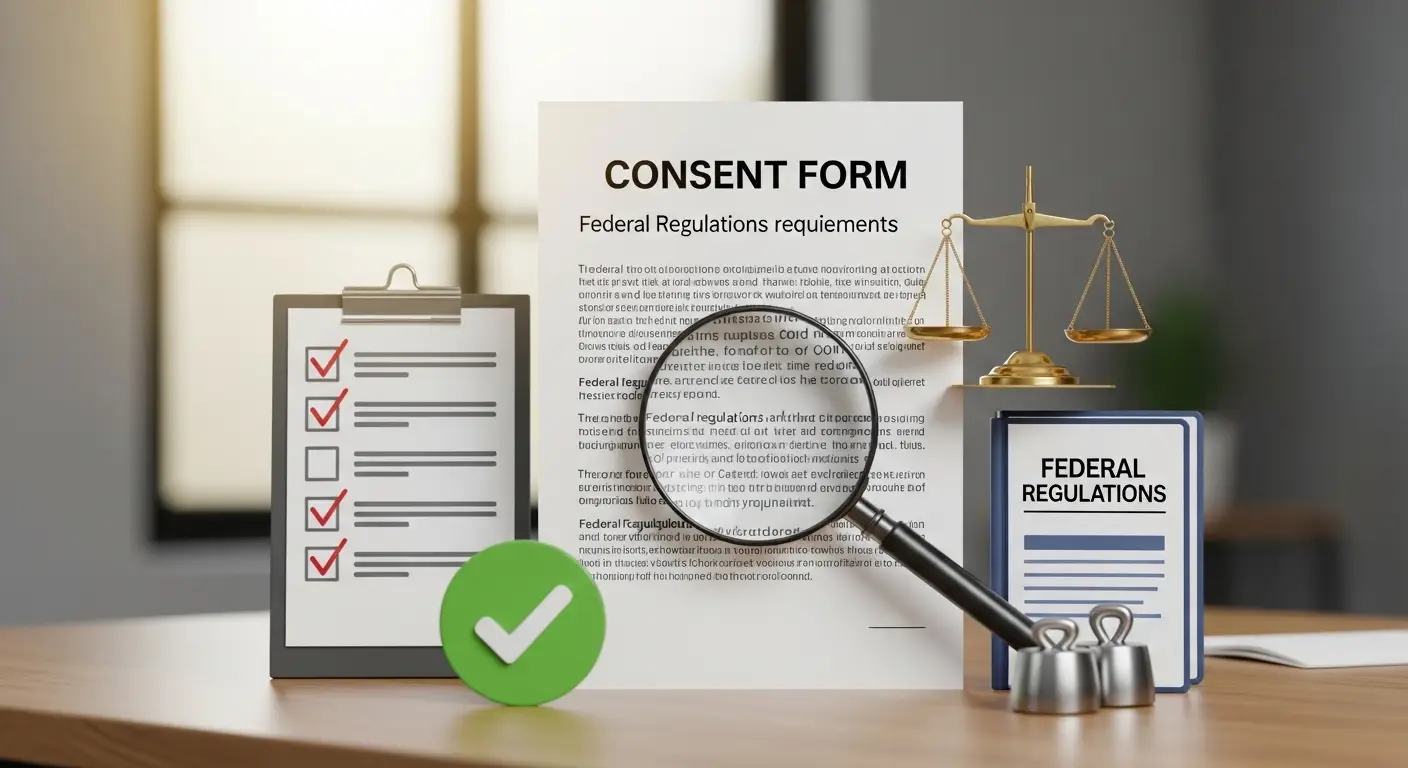
Ensuring compliance with federal regulations during the consent process is not just about following the law—it is about protecting the integrity of the research and ensuring the ethical treatment of participants. By following the guidelines set forth by the federal regulations, researchers build trust with their participants and increase the likelihood of study success.
For example, if a researcher fails to fully disclose risks associated with a clinical trial, they could be held liable for any harm that participants experience. Additionally, non-compliance could lead to the study’s termination or the research institution facing legal repercussions. Thus, adhering to these federal guidelines is not just a regulatory necessity; it also safeguards the research’s credibility and fosters an environment of trust.
How Can Researchers Effectively Implement the Consent Process?
Implementing a comprehensive and effective consent process involves more than just providing a document for participants to sign. It requires creating an environment that ensures participants are fully informed and feel comfortable with their decision to participate. Here are some best practices for researchers:
- Create a Clear Consent Document: The consent form should be easy to read and devoid of technical jargon. It should contain all the required elements: study purpose, procedures, risks, benefits, confidentiality, and voluntary participation.
- Offer a Personal Explanation: A written consent form alone may not be enough. Researchers should consider discussing the form with the participant in person, especially when the study involves complex procedures or sensitive information.
- Use of Decision Aids: For studies involving complex choices (e.g., clinical trials with multiple treatment options), decision aids such as visual aids, pamphlets, or videos can help participants better understand their options.
- Ongoing Communication: Consent is not a one-time event. Researchers should maintain an open line of communication with participants throughout the study. If any changes occur during the research process (e.g., a change in procedure or a new risk emerges), participants should be re-consented.
- Documentation and Record-Keeping: Researchers must maintain records of the consent process, which includes the signed consent forms, any discussions that took place, and documentation of any additional explanations provided to participants. These records are essential for ethical review boards and regulatory compliance.
What Are the Common Pitfalls in the Consent Process?

Even with clear guidelines, there are still common pitfalls that researchers may face when obtaining consent. These pitfalls can undermine the effectiveness of the consent process and lead to legal or ethical challenges.
- Ambiguity in the Consent Form: If the consent form is unclear or overly technical, participants may not fully understand what they are agreeing to. This can lead to issues down the line if the participant claims they did not understand the risks or procedures involved.
- Pressure to Participate: While researchers are required to inform participants that participation is voluntary, there is sometimes unintentional pressure placed on them. Researchers should be mindful not to coerce participants, whether through subtle or overt means.
- Inadequate Understanding: Sometimes, even when a participant signs a consent form, they may not truly understand what they are agreeing to. Researchers should take steps to verify understanding, especially when dealing with vulnerable populations such as children or individuals with cognitive impairments.
- Changes to the Research: Researchers must continuously update consent documentation if there are changes to the study, such as new risks, alterations in procedures, or new information that participants should be aware of. Failure to do so can lead to non-compliance with federal regulations.
- Not Considering Language Barriers: For studies involving participants from diverse linguistic backgrounds, it is essential that consent documents and communications are available in a language that participants understand. Translators or interpreters should be provided if necessary.
Real-Life Example of a Researcher Facing Compliance Challenges
Let’s take a look at a real-life example. Dr. Thompson, a researcher at a large medical university, was conducting a clinical trial to test a new cancer drug. During the consent process, Dr. Thompson made the mistake of using medical jargon in the consent form, which led to confusion among some participants. They signed the form but later complained that they didn’t fully understand the potential side effects. After reviewing the case, the Institutional Review Board (IRB) pointed out the issue and asked Dr. Thompson to revise the consent form to ensure clearer language and a more thorough explanation of the risks. Dr. Thompson had to re-consent the participants, delaying the study but ultimately leading to a more successful and ethically sound research process.
How Do These Federal Regulations Protect the Rights of Participants?
Federal regulations serve as a safeguard to protect human subjects from exploitation or harm during research. They ensure that participants are well-informed, their privacy is respected, and they have the freedom to make an autonomous decision about participation. By setting clear guidelines for consent, these regulations also help prevent misconduct, protect vulnerable populations, and maintain the ethical integrity of research studies.
Conclusion
As part of the consent process, the federal regulations require researchers to prioritize transparency, voluntary participation, and participant understanding. These guidelines are not merely formalities but are central to maintaining ethical standards in research. By ensuring that participants are fully informed, researchers uphold the integrity of their studies and protect the well-being of the individuals involved.
To successfully comply with these regulations, researchers must be proactive in creating clear, concise, and informative consent materials, verifying participants’ understanding, and maintaining open communication throughout the study. Through these efforts, researchers not only fulfill their legal obligations but also foster a trust-based relationship with their participants.
By following the requirements of the federal regulations, researchers contribute to the ethical and responsible conduct of research and protect the dignity and autonomy of those who contribute to scientific advancement.
Source: https://megapersonals.co.com/