
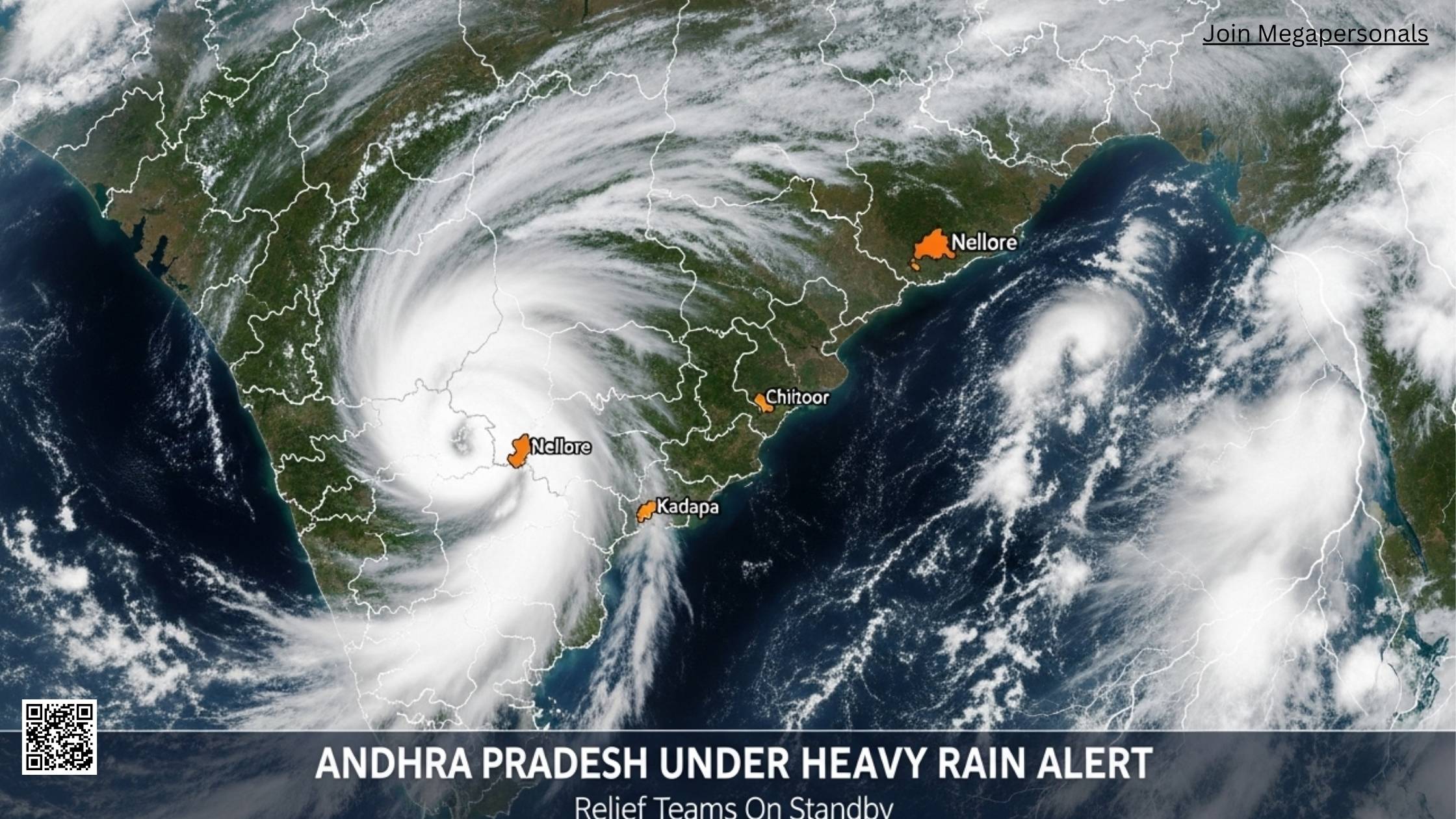
I’m writing to update you on the heavy rainfall situation in Andhra Pradesh—what’s happening, how affected districts are responding, and what you should know if you’re in the region. Yes, intense rain is currently sweeping parts of the state, and local authorities have issued alerts and activated relief operations. I’ll walk you through the details clearly and help you understand what it means whether you live there or are monitoring the situation.
What is going on with the weather
The region is experiencing significant rainfall due to a weather system currently affecting the east‑coast part of India. The India Meteorological Department (IMD) has flagged certain areas of Andhra Pradesh for heavy downpours, especially across coastal and Rayalaseema divisions. Some districts have been placed under red or orange warnings, indicating very heavy or extremely heavy rainfall in short spans of time.
The local administrations have responded by raising district‑level alerts, readying relief teams, and advising residents to prepare for potential flooding or water‑logging.
Which districts are under alert
Here are some of the districts where the authorities have taken action:
| District | Alert level | Key concerns |
| Nellore | Red | Very heavy rain expected; potential flash flooding |
| Prakasam | Red | Coastal and interior areas both affected |
| Kadapa | Red | Interior region; drainage may be challenged |
| Tirupati | Red | Tourist zone; infrastructure stress likely |
| Chittoor | Red | Hills + heavy rain = landslide risk |
| Kurnool | Orange | Heavy rain expected; moderate risk for flooding |
| Anantapur | Orange | Less intense but still actionable rainfall forecast |
These alerts mean more than just “some rain coming” – they signal real potential for sudden water accumulation, disrupted roads, unstable slopes, and related hazards. Being aware of them now gives you a chance to plan.
Why this rainfall is hitting harder
Several meteorological and geographical factors are combining to make this rainfall more serious than usual in parts of the state:
- A low‑pressure area or trough over the Bay of Bengal has increased moisture inflow and cloud development along the coast and inland parts of Andhra Pradesh.
- The coastal districts face additional exposure because of sea‑moisture enhancement and lighter drainage infrastructure in low‑lying zones.
- Rayalaseema and interior zones that are typically drier are seeing heavier rainfall than expected, which means soil and drainage may not be geared for this volume.
- Urban centres and towns with older infrastructure or encroached waterways face higher risk of water logging and surface run‑off because the system is dropping rain faster than drainage can handle.
These combined factors turn what might otherwise be a standard seasonal event into a more urgent one.
What relief teams and government agencies are doing
Relief operations are already in motion across the alerted districts. Here’s a snapshot of what is happening on the ground:
- Operation of district command control rooms: These are staffed round the clock to monitor rainfall, call for evacuations, coordinate with local revenue and disaster‑management departments, and issue real‑time alerts.
- Deployment of quick reaction teams (QRTs) in vulnerable zones including low‑lying areas, flood‑prone riverbanks, and slopes prone to landslides.
- Pre‑positioning of relief camps and shelters: Food, water, medicines, mobile power sources and power backup arrangements are being readied.
- Public advisories and evacuation notices to residents in high‑risk locations – coastal‑belt communities, residents near rivers or streams, and those in weak structures are being asked to move if needed.
- Coordination with medical, fire, and sanitation teams: Especially important in densely populated towns where stagnant water can quickly lead to health hazards.
Relief teams are standing by with full readiness. What remains critical is that residents heed the warnings.
What you should do if you’re in a high‑risk zone
If you live in one of the affected districts or are travelling into the region, here are practical steps to stay safe:
- Check the latest weather updates from IMD or your state’s disaster‑response website/app. Conditions can change rapidly.
- Identify the nearest emergency shelter or relief camp and keep essential documents, medicines and valuables ready in a waterproof bag.
- Avoid areas prone to flooding – riverbanks, streams, neighborhoods with poor drainage. Move to higher ground if you see water rising.
- Do not attempt to cross roads or bridges that are under water. Even shallow water can sweep away vehicles or destabilise roadbeds.
- Turn off non‑essential electrical appliances if you are in a zone where water logging is possible. Avoid contact with electrical panels or wiring if water is nearby.
- Keep communication lines open – have local emergency numbers saved, inform family or friends of your whereabouts, and keep your mobile phone charged.
- After the rainfall, when it eases, check for signs of structural damage if you live near slopes or embankments. Post‑rain hazards include weakened landslide‑prone slopes and mud slides.
Staying informed and prepared will make a difference.
Read details about Pachuca de Soto, Hidalgo
Real‑life implications and examples
To help bring the situation into perspective, consider this example: A few weeks ago a coastal district recorded more than 20 cm of rainfall in 24 hours, prompting a red alert, evacuations of low‑lying villages and temporary closure of local roads. The rainfall led to low‑lying houses developing water in their basements, and farmers in the region reported standing crops submerged due to inadequate drainage.
In towns further inland, roads that are normally quiet became traffic bottlenecks because of flooded underpasses. Emergency services had to use inflatable boats to evacuate stranded residents in one case. These kinds of events underline why the current alerts are serious and why relief teams have been mobilised early.
Impact on agriculture and infrastructure
The heavy rainfall does not only affect homes and roads – it also has broader implications:
- Crop damage: In districts where paddy, maize and other seasonal crops were nearing harvest, sudden inundation can spoil yield and increase losses for farmers.
- Transport disruption: Roads, especially in rural areas, may get washed out temporarily. Landslides in hilly mandals (administrative divisions) may cut off villages.
- Power outages: Heavy rain plus strong winds can topple poles, cause tree‑falls across lines, and lead to outages. Backup power becomes important for critical services like hospitals.
- Public health: Standing water invites mosquito breeding, water‑borne diseases, and difficulties in moving people/medical supplies if access is cut off.
- Urban stress: Towns with older drainage and sewer systems can suffer from waterlogging, sewage overflow and traffic chaos when rainfall intensity exceeds design capacity.
Thus, the ripple effects are significant and reach beyond merely “it’s raining hard”.
Monitoring rainfall and flood indicators
Understanding how rainfall evolves and how to read indicators can help you anticipate risks. Here are some relevant technical terms and what they mean in everyday terms:
- 24‑hour rainfall total: If a region records more than, say, 100 mm of rain in a day, the risk of flooding rises sharply.
- Return‑period rainfall event: Rainfall that statistically occurs once in many years – such an event can exceed infrastructure capacity.
- Run‑off coefficient: In urban areas, more surfaces are impermeable (roads, pavements) so more rain becomes surface water rather than soaking into the ground – this leads to faster accumulation.
- Soil saturation: If the soil was already moist from earlier rain, a new downpour leads to quicker runoff and higher flood risk.
- Drainage capacity: The size and age of drains, culverts and river embankments. If rainfall exceeds what drains can carry, water backs up rapidly.
Here’s a simple table to summarise how a rainfall event escalates risk:
| Indicator | Normal scenario | Elevated risk scenario |
| Daily rainfall | 20 mm | 80‑120 mm in 24 hours |
| Soil condition | Dry | Already saturated from earlier rainfall |
| Surface cover | Mixed vegetation & soil | Urban concrete/mud, little drainage |
| Drainage state | Clear drains | Blocked drains, encroachment, debris in waterways |
| External warning | Yellow/orange alert | Red alert with evacuation orders |
By keeping an eye on those indicators, you can make better decisions about whether to stay put, evacuate, or delay travel.
What happens next and how the situation may evolve
The current rainfall phase may persist for another day or two depending on how the weather system evolves over the Bay of Bengal and how the moisture channels behave. Some districts may see the rainfall taper off; others might have lingering showers or thunderstorms.
Here’s what we as residents and watchers of the situation should keep in mind for the coming period:
- Monitor official updates from IMD and the district disaster management authorities each morning.
- Continue to prepare for intermediate rainfall even if the major downpour passes; often the “after‑effect” rain leads to unexpected flooding because ground is already saturated.
- Be ready to assist neighbours, especially the elderly or those living in flood‑prone zones. Community coordination can make a big difference.
- After the event, there will be a phase of recovery: clearing blocked drains, repairing damaged roads, helping farmers assess crop losses, and restoring services.
- Use this rainfall episode as a reminder for future seasons – keeping drains open, maintaining local flood‑paths and early evacuation readiness can reduce risks next time.
Summary
In short: heavy rain is currently striking parts of Andhra Pradesh. Districts such as Nellore, Prakasam, Kadapa, Tirupati and Chittoor are under red alerts, while Kurnool and Anantapur face orange‑level warnings. Relief teams are ready, shelters are being readied and local authorities are urging vigilance. If you live in these areas—or are travelling through—you’re advised to stay alert, follow official guidance, and take necessary precautions.
We’ll be keeping an eye on developments and will share further updates as needed. Stay safe and keep connected.
Vivo V50 Lite 5G: Detailed Hands-On, Price in Pakistan & Highlights
Frequently asked Questions
How long is the heavy rainfall expected to last in Andhra Pradesh
The duration of rainfall can vary by district, but meteorologists suggest that certain areas may continue to experience showers and thunderstorms for the next two to three days. Monitoring local updates daily is the best way to stay informed.
Are schools and colleges in affected districts closed due to the rain
Decisions about closures depend on the severity of rainfall in specific areas. Authorities often announce temporary closures for schools and colleges in districts under red alerts to ensure the safety of students.
Can residents claim compensation for property or crop damage caused by the heavy rain
Compensation policies are handled by state government departments after damage assessments. Farmers and homeowners may be eligible under specific disaster relief schemes, but claims typically require documentation and verification.
Is it safe to travel on major highways and roads in Andhra Pradesh during the rain
Travel safety depends on local road conditions. Flooded areas, waterlogged roads, and landslide-prone zones can pose serious hazards, so it is recommended to avoid non-essential travel until authorities confirm roads are safe.
How are hospitals and medical services operating during heavy rainfall
Hospitals and emergency services generally remain operational even during heavy rainfall. However, access may be affected in flooded or isolated areas, so it is advisable to contact local facilities before visiting and follow guidance from emergency services.